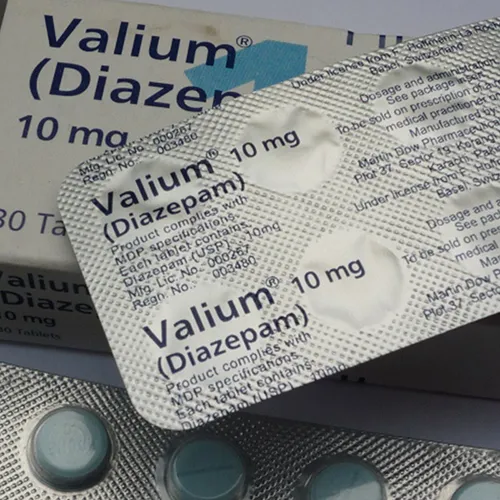
Valium Diazepam 10 mg tablets may be taken with or without food. But try to take it at the same time every day to keep the medicine level steady in your body. Follow your doctor’s instructions on how much and how long to take it, because it can be habit-forming. If you forget to take a dose, take it as soon as you remember. And make sure to finish all the medicine, even if you start feeling better.
Isolating Emergency Panic Attack Relief Failure When Age-Related Diazepam Sensitivity Overrides Standard Protocol
Imagine a 71-year-old woman with a well-controlled anxiety disorder who abruptly experiences an acute panic attack at home. Her partner calls emergency services; the paramedics note her distress, rapid breathing, and hypertension, but she has a history of mild cognitive impairment. Although current U.S. treatment pathways allow use of oral benzodiazepines like diazepam for rapid panic symptom relief, the team hesitates. In older adults, especially those with underlying neurologic vulnerability, initiating diazepam in an emergent context not only amplifies fall and confusion risk but also complicates subsequent monitoring and discharge planning. This scenario forces clinicians to confront a core tension: should the established pharmacologic rescue protocol yield to age-specific safety concerns, even when the need for immediate symptom stabilization is acute?
Order Diazepam Online from US Pharmacy – Fast & Secure Prescription Service
Secure checkoutFast U.S. deliveryDiscreet packagingFDA Approved
Here, the age-linked failure point in standard care logic becomes apparent. While diazepam is effective for rapid relief, its heightened sensitivity profile in older adults—manifesting as increased sedation, delirium risk, and prolonged drug clearance—demands individualized, sometimes guideline-deviating decisions. The pharmacist and prescriber must reweigh the value of immediate panic control against the prospect of iatrogenic harm, especially since U.S. pharmacies must scrutinize such prescriptions under both clinical and regulatory standards. This case exemplifies why, for certain populations, the threshold for deploying diazepam as an emergency anti-panic agent must be carefully isolated, rather than automatically enacted.
For these patients, clinicians frequently pivot to alternate strategies—ranging from cautious non-pharmacologic de-escalation to ultra-short-acting alternatives—underscoring that standard emergency pathways may break down at the intersection of age, drug pharmacokinetics, and real-world safety constraints.
Unraveling Diazepam’s Mechanistic Constraints in Acute Panic Relief Amid Variable Organ Function
Diazepam’s clinical utility for interrupting sudden, severe panic symptoms rests on its rapid central nervous system action as a benzodiazepine. By enhancing GABAergic neurotransmission, it suppresses hyperarousal and the vegetative storm underlying acute panic. However, this same mechanism underpins a prominent clinical boundary: in patients with age-related hepatic or renal impairment—a population overrepresented in real-world emergency settings—diazepam’s active metabolites linger, magnifying risks of oversedation, respiratory depression, and cognitive blunting.
Unlike some shorter-acting benzodiazepines, diazepam’s long half-life and lipophilicity mean its acute stabilizing effects may quickly become a liability, especially when organ reserve is diminished. The unpredictability of metabolism in older adults or those with chronic diseases means clinicians can neither guarantee rapid offset nor anticipate individualized vulnerability. This mechanistic constraint forces acute care teams to reconsider whether diazepam’s theoretical panic-relief advantage justifies the downstream burden of adverse effects and ongoing monitoring, particularly when the risk of harm may outpace the urgency of symptom control.
Thus, while diazepam remains an integral tool for selected patients in panic emergencies, its appropriateness hinges on a real-time risk calculus that links mechanism to organ function. The essential clinical question is not whether diazepam can halt panic symptoms, but whether its unique pharmacologic profile introduces a new safety threshold that the acute scenario cannot ethically or pragmatically cross. Ultimately, this mechanistic limitation warrants a tailored approach—and, when the odds of harm escalate, a pivot to alternative agents or urgent behavioral interventions.
Exposing Prescription Order Friction Points: Why U.S. Diazepam Tablet Access Collapses at the Intersection of DEA Scheduling and Emergency Panic Protocols
Despite diazepam’s clear role in emergency panic attack management, actually ordering tablets through a licensed U.S. pharmacy exposes a unique regulatory and workflow barrier. As a Schedule IV controlled substance, every diazepam prescription—even when urgently needed—demands rigorous DEA-compliant verification, real-time Prescription Drug Monitoring Program (PDMP) checks, and pharmacist-level appropriateness review. Telehealth or e-prescribing does not bypass these scrutiny layers: even after a clinician writes for diazepam, U.S. pharmacies must confirm patient identity, dosing justification, and absence of contraindicating drug interactions or duplicative benzodiazepine therapies.
This system-level access friction is magnified in acute scenarios. While the written prescription may be clinically justified for panic attack relief, actual fulfillment is frequently delayed by insurance prior authorization, pharmacy safety holds, or regulatory red flags—especially if a patient has recently filled another benzodiazepine or is flagged as high-risk due to age or comorbidities. Emergency departments and urgent care clinics may encounter order denials or holds, forcing clinicians to pivot to non-controlled alternatives or onsite administration, with home tablet supply delayed or denied.
Ultimately, the real-world breakdown occurs not at the point of clinical decision, but at the chokepoint of legal order fulfillment. For patients and families, this means that even with a legitimate prescription, access to diazepam tablets for emergency panic symptom relief is not instantaneous and may require direct appeals, documentation, or selection of a different agent. This regulatory bottleneck, enforced by U.S. pharmacy law and DEA oversight, is both a safety net and a practical barrier—one that every prescriber and patient must anticipate when considering diazepam for emergent panic scenarios. The conclusion: seamless symptom relief is subordinated to system-level monitoring, mandating contingency planning at the time of prescribing.
U.S. Clinical Guidance
- Diazepam is not first-line for most panic disorder maintenance but may be considered for select, acute, disabling episodes, usually when other rapid-acting strategies are unavailable or contraindicated.
- FDA-approved indications do not formally include panic attack emergencies, but off-label use is recognized in guideline-driven escalation or as a bridge pending longer-term therapies.
- Standard adult dosing for anxiety-related exacerbations is 2–10 mg orally, repeated as clinically indicated, but must be individualized based on age, organ function, and concurrent medications.
- In all U.S. settings, a valid prescription is required, subject to Schedule IV controls, patient monitoring, and pharmacist review.
Constraining Diazepam’s Safety Envelope: Why Pharmacist Oversight Intensifies During Acute Panic Management in Comorbid Older Adults
The safety profile of diazepam in emergency panic scenarios, especially among older adults with comorbid illness, triggers enhanced pharmacist vigilance and workflow scrutiny. Drug interaction risk is disproportionately higher in this population: polypharmacy, concurrent CNS depressants (e.g., opioids, sleep aids), and fluctuating hepatic function can converge to heighten diazepam’s sedative burden. Beyond pharmacokinetic unpredictability, the danger of paradoxical agitation, falls, and hospital readmission is not theoretical—it is routinely documented in U.S. adverse event reporting systems.
Pharmacists, as the final checkpoint, often intervene to adjust, clarify, or even withhold diazepam orders, especially when signs of inappropriate duplicative therapy surface or when patient age suggests a heightened risk for delirium or respiratory depression. In this regulatory context, the pharmacist’s mandate is not merely to dispense, but to actively constrain diazepam use to those situations where the anticipated benefit decisively outweighs the system-encoded risks. This may result in alternative recommendations, dose reduction, or referral back to the prescriber for risk–benefit re-clarification.
For patients and families, these interventions can be frustrating, appearing as access barriers when, in reality, they are frontline defenses against preventable harm. This safety containment logic is especially pronounced in acute panic scenarios, where the pressure for immediate relief can unintentionally eclipse the need for prudent risk management. The section concludes with a monitoring-focused perspective: the requirement for robust pharmacist oversight is not an optional layer, but an embedded safety mechanism that actively shapes—and sometimes halts—panic attack pharmacotherapy in the U.S.
Redirecting Care: When Non-Benzodiazepine Alternatives Supersede Diazepam in Acute Panic Events for High-Risk Populations
Even in the tumult of an emergent panic attack, there are defined boundaries where diazepam is not the preferred intervention—particularly for older adults with cognitive impairment, patients on chronic opioids, or those with a personal or family history of substance use disorder. In these high-risk populations, U.S. clinical logic prioritizes non-benzodiazepine options and non-pharmacologic intervention as the first pivot, both to avoid compounding physiological instability and to preserve future treatment flexibility. SSRIs, SNRIs, or off-label hydroxyzine may be considered as non-addictive pharmacologic alternatives, with cognitive-behavioral techniques deployed when feasible and safe.
For some, even the most severe panic symptoms are better addressed with brief behavioral interventions or supervised environmental control than with a medication that could precipitate delirium, falls, or respiratory compromise. At the pharmacy workflow level, such scenarios prompt order denials, alternative recommendations, or urgent consultation with the prescriber. This is not simply a function of regulatory inertia but is rooted in a deliberate, population-safety prioritization—where the boundaries of diazepam’s utility are defined by the unique risks posed by the patient, not the urgency of the panic event.
The patient-specific conclusion: in the acute care of certain vulnerable populations, the imperative to redirect away from diazepam is not a denial of care, but a recalibration toward safer, longer-term control strategies that do not amplify baseline risk.
Frequently Asked Questions
- How could a verification mismatch delay my ordered Diazepam tablets from a U.S. pharmacy after a panic attack prescription?
A mismatch between your prescription details and state Prescription Drug Monitoring Program (PDMP) records can flag your order for manual review. This verification process is enforced by both U.S. pharmacies and federal regulations, and may require your prescriber to confirm diagnosis and necessity for acute panic use. Such delays, while frustrating, are protective steps to ensure safety and compliance with controlled substance laws, particularly when orders originate from emergency care visits. - Why do insurance companies sometimes reject an order for Diazepam in an emergency panic situation?
Insurance plans may deny or delay coverage for Diazepam if the indication falls outside FDA-approved uses, such as off-label acute panic attack relief, or if recent claims show overlapping benzodiazepine prescriptions. This can necessitate appeals, prior authorization, or selection of a covered alternative. The process safeguards against duplicative medication use, emphasizing the importance of close prescriber–insurer coordination for timely care. - Can abrupt discontinuation after a single ordered tablet for panic lead to withdrawal symptoms?
Single-dose or infrequent Diazepam exposure for acute panic attacks rarely triggers physiologic withdrawal, but repeated or escalating use increases dependency risk. Always follow your clinician’s tapering recommendations if your use becomes more frequent. If you experience rebound anxiety or unusual symptoms after stopping, promptly contact your healthcare provider for assessment. - Should older adults with liver impairment avoid ordering Diazepam for panic attack emergencies?
Older adults with hepatic compromise are at higher risk for prolonged sedation and accumulation of active metabolites from Diazepam. Your prescriber may suggest alternative therapies or much lower initial doses, and the pharmacy may require additional monitoring. Caution is warranted whenever age or organ function alters medication clearance, and pharmacist consultation is advised before filling any order. - How can a pharmacy legally deny my Diazepam tablet order even if my doctor prescribes it?
U.S. pharmacies must comply with both DEA regulations and state law, granting pharmacists authority to deny or hold orders if safety concerns, drug interactions, or regulatory red flags arise—even with a valid prescription. This is not a refusal to provide care, but a mandated review to prevent harm in high-risk or ambiguous scenarios. Discuss alternative options with your provider if your order is denied. - What alternatives are considered if my ordered Diazepam cannot be dispensed for panic relief?
Clinicians may opt for non-benzodiazepine medications, such as certain antihistamines or SSRIs, or recommend non-pharmacologic strategies like controlled breathing or cognitive de-escalation. These alternatives are prioritized when Diazepam’s risks are elevated or when regulatory limits preclude rapid dispensing. Your care plan should be individualized to balance both urgency and long-term safety. - If my order for Diazepam is held, can a telehealth provider expedite the approval?
Telehealth clinicians may clarify clinical details or submit additional documentation to the pharmacy, but they cannot bypass DEA or pharmacy safety checks. The fulfillment timeline depends on regulatory review, not provider platform. For urgent symptom relief, discuss immediate non-medication strategies with your care team while your order is processed. - Will my travel plans impact my ability to order or receive Diazepam for panic emergencies?
If you travel across state lines, pharmacy regulations and controlled substance laws may restrict fulfillment or transfer of your Diazepam prescription. Advanced planning and communication with both your prescriber and a licensed U.S. pharmacy are essential to ensure continuity of care. Always carry documentation and alert your provider to upcoming travel to avoid interruption.